Incremental SBOM Updates After Dependency Pin Bumps
Keeping SBOMs in sync with dependency bumps prevents silent audit failures.
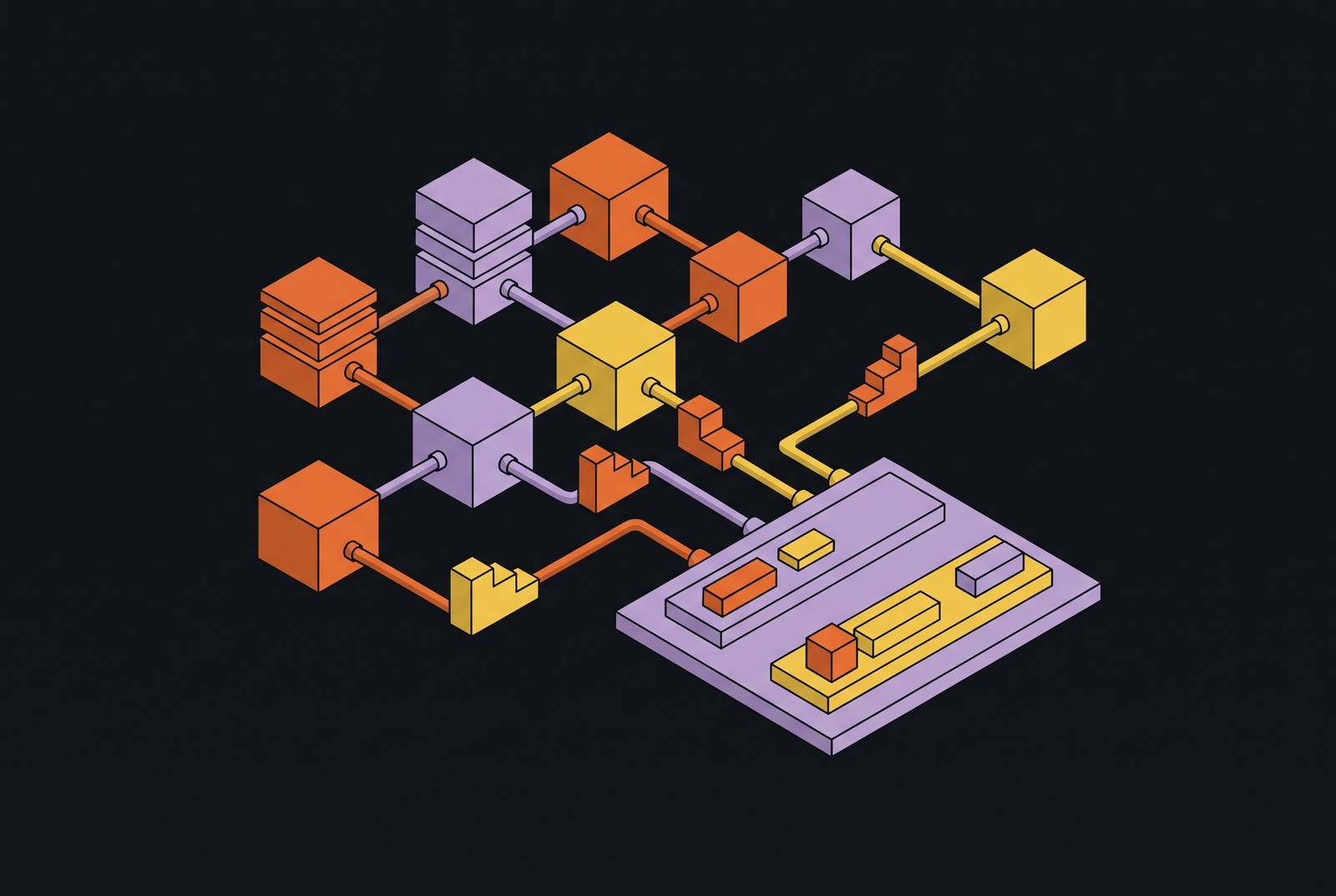
A dependency pin change rewrites the exact record the SBOM exists to describe, so if you haven't touched the SBOM since the bump, it's wrong the moment the bump lands, not merely out of date. The chain runs in one direction: CI resolves dependencies, writes a lockfile, and carries pinned component identifiers all the way through to deployment telemetry. If you break any link in that chain, you lose the thread that audit, triage, and vulnerability response depend on. A stale SBOM is worse than having no SBOM, because it tells a team a known-good inventory exists when it doesn't, turning an honest "unknown" into a confident, wrong answer. Treating the pin bump and the SBOM update as two separate tasks, on two separate timelines, misreads what they actually are: one event, recorded twice, and the record has to update in lockstep or it starts lying.
What automated bumping tools do and do not handle
Automated update tools do one job well: they find a newer version or SHA and open a pull request that changes the pin. They do not regenerate or patch the SBOM that's supposed to describe the result, because the tool that bumps the dependency and the tool that maintains the SBOM run as separate systems with no handoff between them. That gap gets worse, not better, as teams lean harder on automation: the faster the bumps arrive, the faster the SBOM falls out of sync, which turns the security benefit the automation was supposed to deliver into its opposite.
The failure gets sharper when a secondary manifest sits where the bumping tool never looks. In the IvanSkainet/arena-agent project, a runtime-record manifest keyed dependencies by SHA, but the update tool had no awareness that manifest existed. Every bump to an action or action-like dependency turned into an unrecorded pin, so three separate Dependabot pull requests each failed twenty CI checks, because the runtime record had never heard of the new SHA. Nothing about that failure was a fluke or a one-off misconfiguration. It's what happens whenever a bumping tool's awareness of a dependency graph stops short of every place that graph gets written down, and the SBOM is almost always one of those places.
SBOM freshness under the 2026 CISA minimum elements
The 2026 CISA guidance nearly doubled the required SBOM data fields, from 7 to 17; it split them between SBOM Metadata and Component Data categories and added ten entirely new elements. Several of those additions bear directly on what happens the moment you change a pin. Now a requirement, SBOM Version needs an identifier that marks any change from a prior version, so a pin bump that triggers a regeneration must produce an artifact that's distinguishable from the one before it. SBOM Generation Context records the lifecycle phase at which the SBOM was produced, before the build, during it, or after, and an SBOM generated before a bump that never gets regenerated afterward now carries the wrong context for whatever actually shipped. SBOM Author Signature requires a digital signature tied to the author, so when you regenerate an SBOM you also have to re-sign it, a step any patch-in-place shortcut has to account for rather than skip.
Two more additions turn staleness from an inconvenience into a compliance failure on a required field. Component Hash Value and Component Hash Algorithm are now minimum elements, so if an SBOM still carries the pre-bump hash for a component, it's wrong on a field CISA now mandates. Component License is also now required, and because a major version bump can carry a license change with it, an un-updated SBOM can quietly misstate a company's license posture without anyone noticing. CISA also requires at least one machine-processable identifier, such as a PURL or CPE, for every component, so a bumped component needs an updated PURL in the regenerated SBOM, not just a changed version number sitting next to an identifier that no longer matches. None of this reads as hygiene anymore. Regulators will eventually audit against it as a checklist, line by line.
Three categories of breakage when the SBOM lags behind a pin bump
A stale SBOM doesn't fail quietly in one corner of an organization. It breaks at least three distinct operational workflows, and each one has a different owner and a different blast radius, so no team gets to treat this as someone else's problem.
Vulnerability response breaks first. An SBOM still listing the pre-bump component version leads scanners to either miss a CVE that the new version actually introduced or keep alerting on a CVE the bump was supposed to have already fixed, and both outcomes erode the signal security teams depend on to triage and prioritize. Rollback auditability breaks next. Picture a Kubernetes-deployed service that needs to roll back after a bump introduces a regression: the deployment hash no longer lines up with the SBOM on file, so there's no way to produce an audit-ready record of what was actually running at any given point during the incident. Developer onboarding and reproducibility break last, and the cost compounds the longest. Research on Docker builds found that only a small share of rebuilt images matched the original set of installed package versions exactly, so if you believe you've pulled a pinned environment after an undocumented bump, you can end up with a silently different stack, and the SBOM offers no way to catch it.
Full regeneration versus incremental patching: what each approach produces
Two strategies exist for closing the gap, and they trade speed against completeness in different ways. Full regeneration on every pin bump produces the most accurate artifact available: the tool walks the entire dependency graph again, re-hashes every component, and re-signs the document. That accuracy costs time: it adds latency to the bump pull request and requires the regeneration toolchain itself to be available and reproducible inside CI.
Incremental patching moves faster by updating only the component entries that changed and the transitive edges those changes affect. Its accuracy depends on whether the patching tool can correctly find every node in the graph the bump actually touched, including transitive dependencies that shifted as a side effect of the direct change. If one of those nodes is missed, the SBOM stays stale, just in a way that's harder to spot. And the 2026 CISA fields close off any illusion of a lightweight shortcut: even a narrowly targeted patch has to produce an SBOM Version update, a new timestamp, and a fresh signature, so there's no update path that skips those requirements just because the change itself was small.
Two companies have already built production answers to this tradeoff, and each one resolves it differently. Chainguard treats every rebuild as an SBOM event by default: Chainguard Hardened Images get rebuilt daily with signatures, SBOM, and provenance included automatically, which collapses the distinction between "full regen" and "incremental update" entirely, since the SBOM simply comes out of every build rather than requiring a separate step afterward. OX Security takes a different route with its Pipeline Bill of Materials, which tracks component, dependency, and configuration changes continuously across the pipeline, keeping the inventory accurate across every build and release instead of only at the moment someone generates it. Where Chainguard makes the SBOM an automatic byproduct of the build itself, OX treats it as a live record that updates continuously rather than a snapshot taken at one point in time. Neither approach is the obviously correct one for every team; they represent two different places to put the coordination that the bump lifecycle otherwise lacks.
Wiring SBOM regeneration into the bump lifecycle
The only way to make either approach stick is to gate the bump PR on the SBOM output rather than treat the SBOM as a follow-up ticket. You need four coordinated steps working together to close that gap, not four separate owners working in sequence.
The lockfile, manifest, or action-runtime record gets updated first with the new SHA or version, which is the step every bumping tool already handles on its own. From there, you need to re-resolve the full transitive dependency graph from the updated pins directly, rather than infer it from whatever the PR diff happens to show, because this is where incremental patching tools most often miss a node and let the gap slip back in. Once the graph is resolved, it gets written into a versioned, signed SPDX or CycloneDX document carrying an updated timestamp, generation context, and component hashes, satisfying the 2026 minimum elements in full rather than partially. Finally, the new SBOM gets attached to the build artifact through a hash binding that ties the deployment unit to the exact SBOM version, so you get rapid CVE discovery and hash-level blocking without re-scanning the artifact from scratch later.
The shape of that fix looks different depending on the platform underneath it. For GitHub Actions workflows, the failure pattern visible in the advanced-security/github-sbom-toolkit pull request points to the specific repair: the SBOM generation step has to run after the lockfile updates and before the PR becomes mergeable, not as a separate job running on its own schedule somewhere else. For Nix-based environments, the problem takes a different shape altogether, because every build there is a pure function of explicitly declared, transitively hashed inputs, so a pin bump automatically produces a new, cryptographically derivable dependency graph rather than an ambiguous one. Tools such as tiiuae/sbomnix can generate SBOMs straight from a Nix flake reference or store path, query the dependency graph with nixgraph, and rank outdated dependencies by downstream impact with nix_outdated, consuming the graph directly instead of re-scanning a finished build artifact after the fact. A platform engineering team that promotes a declarative environment manifest instead of a container image gets a further advantage from this structure: an atomic edit to the manifest produces an input-derived hash that can travel with the deployment, enabling the same hash-level blocking and CVE-to-patch workflow the SBOM is meant to support, without running a separate build-scan-tag-push cycle on the side.
MCP servers and AI agents as a new pin-bump surface that most SBOM workflows ignore
When CVE-2025-6514 landed, teams whose SBOMs already covered their MCP server dependencies knew within minutes whether they were exposed, while teams without that coverage had to manually audit every integration by hand, the exact burden SBOMs were built to remove. The vulnerability exposed a surface most SBOM workflows haven't caught up to yet. Every MCP server an AI agent can call is itself a runtime dependency with its own package graph, so it needs the same incremental SBOM update cycle as any other dependency tied to pin bumps. MCP server dependencies run through ordinary Node.js package.json and Python pyproject.toml trees, so they face identical pin-bump staleness risk as any other package graph, yet they rarely appear inside the SBOM that covers the application calling them.
Practitioners describe this shift as supply chain governance moving out of the "visibility era" and into a "governance era," where AI agents count as primary actors in the supply chain with their own artifact provenance requirements, not as black-box services sitting outside the SBOM's boundary. The consequence for the bump lifecycle is direct: any workflow built to regenerate SBOMs when application dependencies get bumped has to extend that same trigger to MCP server dependency graphs whenever those graphs change, or the coverage gap will keep widening with every new agent integration a team adds.
What accurate incremental SBOM updates require from the environment underneath
Every mechanism described so far, gated PRs, graph re-resolution, versioned and signed artifacts, attestation hashes, requires one condition that produces all of it: the environment producing the SBOM has to be reproducible. At that point the regenerated SBOM isn't stale in the way an unregenerated one is, it's inaccurate in a new and harder-to-detect way, since the artifact looks current while describing a graph that CI itself can't consistently reproduce. Every structural fix this piece has laid out, from CISA's versioned and signed fields to Nix's pure-function dependency graphs to MCP server coverage, rests on that same foundation: an SBOM can only describe the supply chain accurately once the system generating it can reliably reproduce the exact thing it's describing.
Sources
- SIT: An accurate, compliant SBOM generator with incremental construction (ICSE 2025 - Demonstrations) - ICSE 2025
- SBOM for Agent-Driven Pipelines: Generation & Compliance
- SBOM Security in 2026: Why Inventory Alone No Longer Reduces Risk
- 2026 Minimum Elements for a Software Bill of Materials (SBOM) | CISA
- fossa.com
- engineering.backbase.com